English
Views: 0 Author: Holry Spindle Motor Publish Time: 2026-01-10 Origin: Site


When it comes to choosing the right spindle for your CNC machine, the decision between air cooled and water cooled spindles can be a pivotal one. The spindle plays a crucial role in the performance and longevity of your equipment, and selecting the right cooling system can impact efficiency, cost, and maintenance.
In this blog, we'll break down the key differences between air cooled and water cooled spindles, their pros and cons, and which one might be best for your business, whether you're a hobbyist, a manufacturer, or a wholesale distributor.China's Top 5 Spindle Motor Manufacturer. Let's delve deeper and uncover the details.
Introduction to CNC Spindles
What are Air Cooled Spindles?
What are Water Cooled Spindles?
Air Cooled vs Water Cooled Spindles: A Detailed Comparison
Cooling Efficiency
Maintenance Requirements
Size and Space Considerations
Cost Comparison
When to Choose Air Cooled Spindles
When to Choose Water Cooled Spindles
Holry: Leading the Way in Spindle Solutions
Conclusion: Making the Right Choice for Your Business
CNC spindleis a key component in any CNC (Computer Numerical Control) machine, providing the rotational force necessary to perform various machining tasks, from cutting to engraving. The spindle's motor and cooling system determine its efficiency, power, and overall performance.
CNC spindles come in two main types of cooling systems: air cooled and water cooled. The cooling system’s job is to regulate the temperature of the spindle, preventing it from overheating during intense operations. Overheating can reduce the lifespan of the spindle and affect machining precision, so choosing the right cooling solution is critical.
In this blog, we’ll explore both options and help you understand their strengths and weaknesses, so you can choose the right spindle based on your business needs.


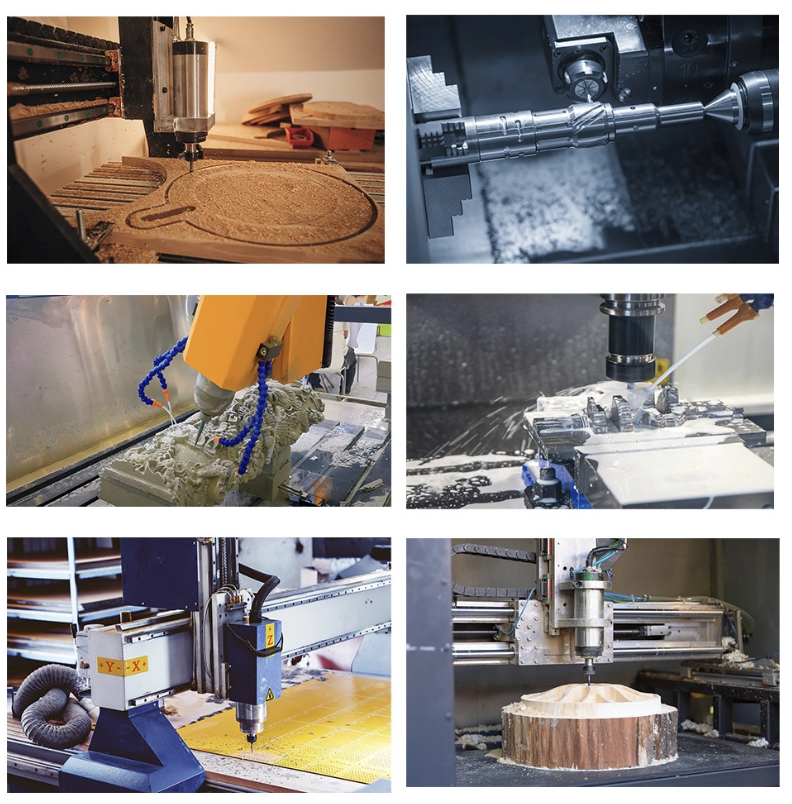
Exploring the Different Types of CNC Spindles

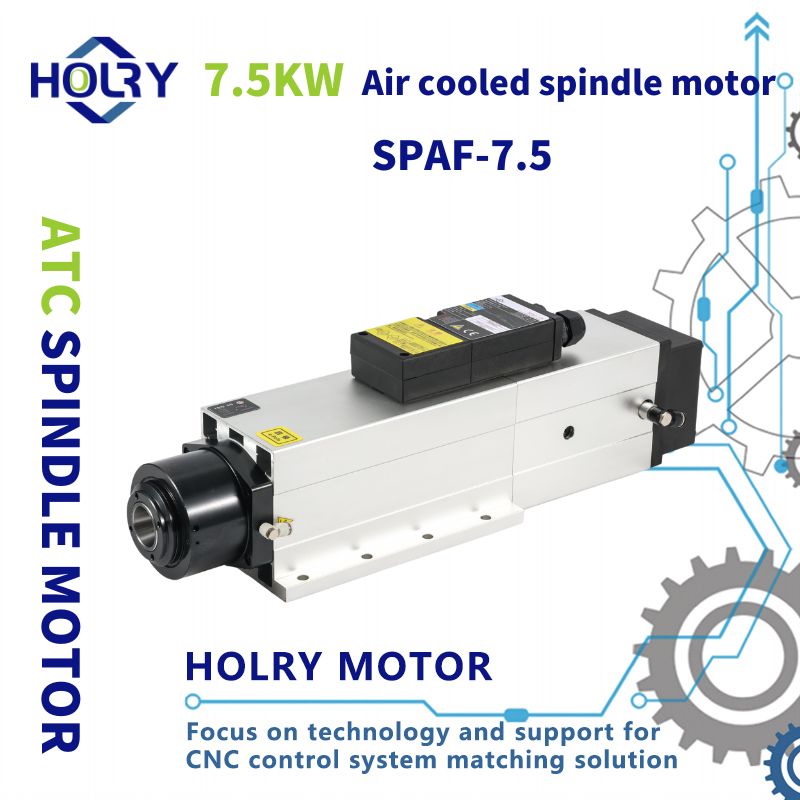
HOLRY Spindle Motor For CNC Machines
Air cooled spindles use ambient air to dissipate heat generated by the motor during operation. The heat from the spindle is transferred to the air around it, and fans are used to blow the hot air away from the spindle. This type of cooling system is commonly used in smaller CNC machines, such as desktop routers and small milling machines.
Air cooled spindles use built-in fans to circulate air around the spindle motor.
The cooling mechanism is simpler and does not require a separate water cooling system or a pump.
Air cooled spindles tend to be lighter compared to water cooled models, making them ideal for applications that require mobility.
Water cooled spindles, on the other hand, utilize water to absorb and dissipate heat. A closed-loop water cooling system circulates water through the spindle, passing the heat to a heat exchanger, which is usually attached to an external reservoir or a cooling unit.
Efficient cooling: Water has a higher thermal conductivity compared to air, making it a more efficient coolant.
Closed-loop system: Water is constantly recirculated within a closed system, minimizing the risk of contamination.
Larger, more powerful motors: Water cooled spindles are better suited for heavy-duty applications that require sustained high-speed operation.
Let's dive deeper into the differences between these two types of spindles across several important parameters.
Air cooling works well for lighter tasks and lower to mid-range power applications. However, air has a relatively low thermal conductivity, which means air cooled spindles might struggle to handle the heat produced in heavy-duty operations. As a result, air cooled spindles may experience more temperature fluctuations, leading to potential overheating if used for extended periods at high speeds.
Water is much more efficient at absorbing and dissipating heat than air. Water cooled spindles maintain a more consistent temperature even during high-load operations, which is why they are preferred for high-power CNC machines that run at high speeds for prolonged periods. For precision and heavy-duty applications, water cooled spindles provide better temperature control, ensuring stable performance.
Verdict: If you need sustained power and efficiency, a water cooled spindle is the better choice due to its superior cooling efficiency.
Air Cooled Spindles:
Maintenance for air cooled spindles is generally simpler and more straightforward. Since no liquid is involved, the risk of leaks or contamination is non-existent. The only maintenance needed is cleaning the fan and ensuring that airflow is not obstructed.
Water Cooled Spindles:
Water cooled spindles require more regular maintenance. You need to check the water levels and ensure that the water is free from impurities. In addition, the pump and cooling system need to be regularly inspected to prevent leaks or failures. If the cooling system is not maintained properly, it can result in reduced cooling efficiency and potential spindle overheating.
Verdict: Air cooled spindles require less maintenance and are easier to manage, making them a better option for users who need minimal downtime and simpler upkeep.
Air Cooled Spindles:
Air cooled spindles are compact and don’t require additional space for water pumps, reservoirs, or cooling units. This makes them ideal for smaller workshops or operations with limited space.
Water Cooled Spindles:
Water cooled spindles are bulkier because they come with an external cooling unit. This means that they need more space for installation and may require additional plumbing for water circulation.
Verdict: If space is a concern, air cooled spindles will save you valuable room in your workspace.
Air Cooled Spindles:
Generally, air cooled spindles are more affordable upfront. Their simpler design and lack of need for a complex water circulation system make them less expensive to purchase and install.
Water Cooled Spindles:
Water cooled spindles are usually more expensive. Not only do you have to pay for the spindle itself, but also for the cooling unit, water pumps, and possibly even additional plumbing. Additionally, the maintenance costs over time can add up, especially if parts need replacing.
Verdict: For businesses on a tighter budget or those just starting out, air cooled spindles are more cost-effective. However, if your operations justify the need for a more robust system, water cooled spindles might offer a better return on investment in the long run.
Air cooled spindles are ideal for smaller machines or desktop CNC routers where space and cost are limited.
Air cooled spindles perform well for light to medium-duty tasks such as engraving, light milling, and cutting of softer materials like wood and plastic.
If you are looking for minimal maintenance and fewer moving parts to worry about, air cooled spindles are a great option.
Water cooled spindles are perfect for large industrial machines that require high power, speed, and continuous operation. These include tasks such as high-speed milling, drilling, and cutting of metal or harder materials.
Water cooled spindles offer superior temperature regulation, making them ideal for industries that demand high precision and consistency, such as aerospace, automotive, and medical device manufacturing.
If your machine will be running for long hours, a water cooled spindle can handle the sustained workload without overheating.
At Holry, we understand the importance of choosing the right spindle for your operations. Whether you're looking for air cooled or water cooled spindles, we offer high-quality, durable, and efficient spindles that meet the needs of various industries. Our spindles are engineered for reliability and long-lasting performance, helping you boost productivity and reduce downtime.
We provide expert advice, excellent customer service, and comprehensive after-sales support to ensure that your business gets the best spindle solution tailored to your specific needs.
In conclusion, both air cooled and water cooled spindles have their advantages, and the right choice depends largely on your application, space limitations, maintenance preferences, and budget.
For smaller machines or light-duty applications, air cooled spindles may be the perfect fit due to their cost-effectiveness, ease of maintenance, and simplicity.
For heavy-duty operations or precision tasks, water cooled spindles provide superior cooling, extended operational capability, and higher efficiency.
Ultimately, the decision between air cooled and water cooled spindles comes down to your specific needs and operational requirements. Choose wisely, and you'll ensure the long-term performance and reliability of your CNC equipment.
For wholesalers and B2B clients, offering the right spindle solution is key to building long-term relationships with your customers. When stocking and selling spindles, understanding the needs of your clients can help you make better recommendations and increase customer satisfaction.
The demand for air cooled and water cooled spindles can vary significantly by industry. For instance:
Many woodworking CNC machines use air cooled spindles due to their lighter weight and lower cost. These spindles are sufficient for the lighter tasks typically associated with wood, plywood, and MDF cutting.
These industries often require high-performance water cooled spindles. When working with metals, composites, or other hard materials, a water cooled spindle ensures efficient heat dissipation and allows the spindle to operate at high speeds without overheating. In aerospace and automotive manufacturing, precision is paramount, making water cooled spindles an ideal choice for these applications.
If you're a wholesaler looking to expand your spindle product offerings, it's important to carry a balanced selection of both air cooled and water cooled spindles. Providing a variety of options ensures you can cater to a wider range of customer needs, whether they require budget-friendly spindles for lighter tasks or high-end models for heavy-duty operations.
Offer a selection of air cooled spindles for smaller CNC machines, routers, and engraving machines. These are especially popular among hobbyists, small businesses, and DIY enthusiasts.
For larger industrial machines, water cooled spindles are essential. By stocking high-quality water cooled spindles that can handle rigorous tasks, you’ll attract clients from industries like manufacturing, aerospace, automotive, and metalworking.
Whether you’re a small machine shop, a large manufacturer, or a spindle distributor, Holry can help your business thrive with top-tier spindle solutions. Here's how:
Choosing the right spindle requires understanding the intricacies of cooling systems and the demands of your specific operations. Our team of experts at Holry can guide you through the selection process, helping you pick the ideal air cooled or water cooled spindle for your machine and operational needs.
Holry manufactures reliable, durable, and efficient spindles designed for performance. Our spindles are built to last, minimizing downtime and ensuring continuous productivity. With both air cooled and water cooled spindle options available, we offer products that meet the needs of diverse industries and applications.
Every business is unique, and we understand that one size doesn’t fit all. If your operation has specific requirements, we can provide custom spindle solutions tailored to your needs. Whether you need a spindle with specific power ratings or special cooling solutions, Holry’s engineers are ready to work with you to create the perfect solution.
Holry stands by its products with exceptional after-sales support. We offer comprehensive warranties on our spindles, and our team is available to assist with troubleshooting, maintenance advice, and replacement parts. This ensures your operations continue smoothly, even after the sale.
Choosing between air cooled and water cooled spindles is ultimately about matching your cooling solution to the tasks at hand. It's important to evaluate your long-term needs, the nature of the materials you’ll be working with, the environment in which your CNC machine will operate, and your budget.
Your machine is relatively small and you have limited space.
You work with lightweight materials like wood, plastic, or foam.
You prefer lower upfront costs and less maintenance.
Your operation runs at moderate speeds and isn’t high-duty.
You work with heavy-duty materials such as metals, composites, or stone.
You need a spindle that can handle high speeds for long durations.
Precision and temperature control are critical to your operation.
Your CNC machine runs for extended hours with continuous operation.
As technology advances, the demands on CNC spindles continue to evolve. Manufacturers are constantly exploring new ways to improve spindle efficiency, cooling systems, and performance. Here are a few trends to watch for:
Some companies are looking at hybrid systems that combine air and water cooling, allowing for more adaptable performance across different tasks. This could be particularly beneficial for businesses that have varying cooling requirements depending on the application.
With the rise of Industry 4.0 and the Internet of Things (IoT), the next generation of spindles may incorporate smart technology. These spindles could have sensors that monitor temperature, vibrations, and performance, sending real-time data to operators or maintenance teams to ensure optimal operation.
As the world moves toward more sustainable practices, the demand for energy-efficient spindles is expected to increase. Companies may develop spindles that use less power while still delivering the necessary performance. Both air and water cooled spindles may see innovations that help reduce energy consumption.
In conclusion, Holry offers a diverse range of both air cooled and water cooled spindles, allowing businesses to choose the best option based on their specific needs. By understanding the key differences, advantages, and disadvantages of these cooling systems, you’ll be in a better position to select the spindle that maximizes both performance and longevity.
Whether you need an air cooled spindle for a small machine shop or a water cooled spindle for industrial-grade CNC applications, Holry has the expertise, products, and support to meet your needs. Choosing the right spindle will ensure smoother operations, better results, and ultimately greater success for your business.
We hope this guide has helped clarify the key factors in choosing between air cooled and water cooled spindles. At Holry, we are committed to providing our customers with high-quality spindles that deliver exceptional performance, and we look forward to helping you make the right choice for your operations.
Call to Action:
If you’re ready to choose the perfect spindle for your business or need help with selecting the right spindle solution, contact Holry today. Our team of experts is here to guide you every step of the way!